
Coming October 2026
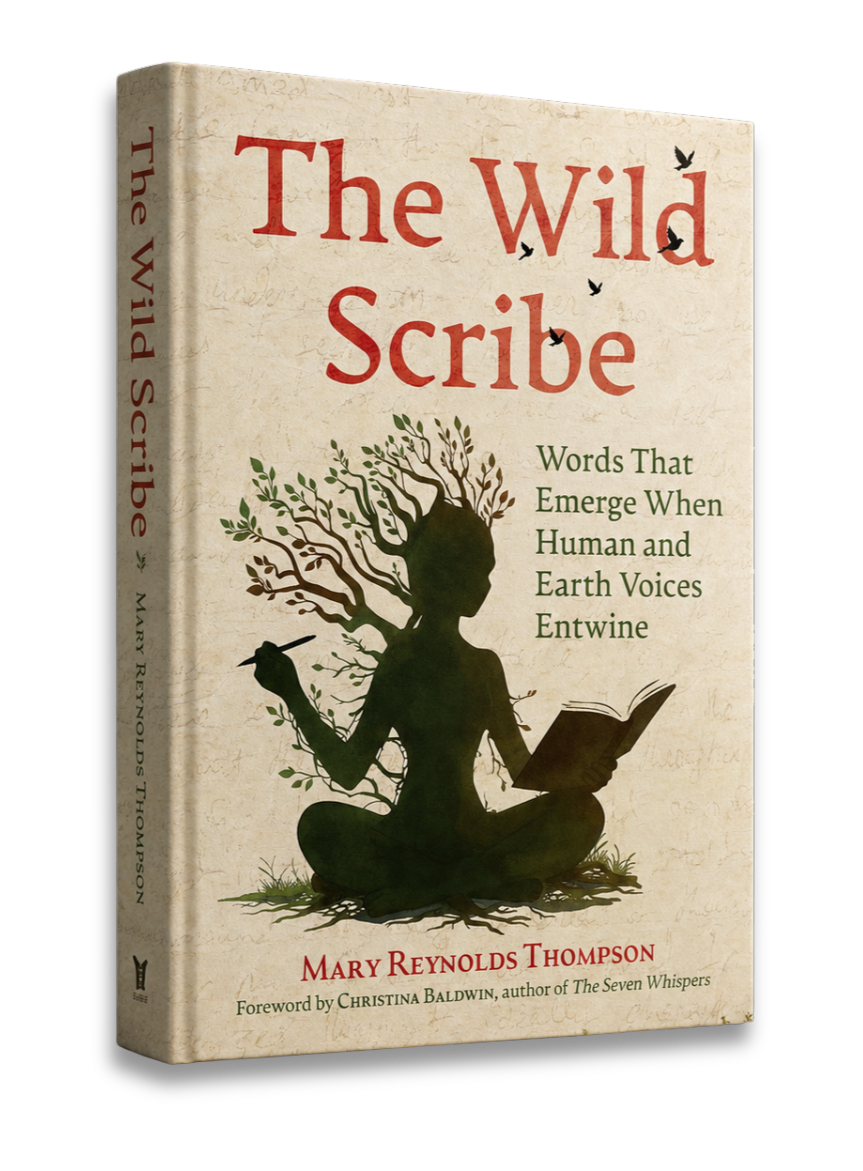
The Wild Scribe
Words That Emerge When Human and Earth Voices Entwine
A transformative guide to reconnecting with nature through writing, presence, and ecological awareness
PRE-ORDER NOW AT





-
Teaches step-by-step writing practices that foster deep connection with place, seasonal rhythms, and the natural world
-
Provides practical prompts and exercises designed to cultivate wild language, ecological literacy, and personal transformation
-
Offers creative journaling techniques to process climate grief, restore belonging, and participate in the renewal of Earth
Drawing on decades of experience as a facilitator of poetry and journal therapy, Mary Reynolds Thompson shows how to move beyond observation and into relationship with the land, using writing as a tool for presence, healing, and ecological stewardship.
The author introduces the concept of “wild language”—words that emerge from the co-mingling of human and Earth voices. She provides methods for cultivating wild language through ten themed sessions, each with writing prompts, participant examples, and exercises that address topics such as grounding, naming, seasonal awareness, and animal embodiment. You will be guided to explore your immediate environment, chart the seasons, and engage with the soul of a place.
Practical applications include character sketches of plants and animals, haiku and haibun writing, seasonal field notes, and reflective exercises for processing solastalgia and climate grief. Thompson’s hands-on approach will support eco-therapists, writers, educators, and anyone seeking to deepen their relationship with the natural world. By following this book’s guidance, you will develop ecological literacy, restore a sense of belonging, and discover how writing can be a form of creative renewal.

The Wild Scribe wins the NYC Big Book Award for Nature
The Wild Scribe situates writing as an act of reciprocity between the self and the Earth. This guide will empower you to embody the principles of wild language and reimagine your role within the living world.
Endorsements

“Mary Reynolds Thompson’s elegantly written book gives new life to the hallowed tradition of nature journal writing: an important, reflective, and moving practice of exploration and appreciation much needed in a time of constant distraction. Wild Writing invites writing as listening: to the elements, the seasons, the presence of place, our innermost self. As Wild Scribes we find ourselves reentering the Great Conversation, back in creative relation with the more-than-human presences around us.”Craig Chalquist, Ph.D., author of Terrapsychological Inquiry and coeditor (with Linda Buzzell) of Ecotherapy

“This fabulous book is a wild flight through the creative mind—yours and the Earth’s. Mary Reynolds Thompson combines philosophical insight, ecological wisdom, poetic awareness, and practical advice into a must-have guide to writing on a planet alive with imagination. The Wild Scribe connects us to our depths and vivifies our kinship with the oceans, cloudscapes, animals, and galaxies.”DREW DELLINGER, poet, teacher, and author of Love Letter to the Milky Way
“The Wild Scribe arrives at exactly the right moment—when the living world needs witnesses as much as it needs activists. Part guided writing practice, part chorus of voices, Mary Reynolds Thompson weaves her own writing with that of dozens of Wild Scribes responding to her prompts, creating a living anthology of human and Earth in conversation. Drawing on haiku, haibun, solastalgia, and the magic of naming, she shows us that Wild Writing is not mere observation but a way of grieving what is being lost, falling in love with what remains, and caring for a world that needs our words. For hikers, ecotherapists, poets, and anyone who has felt the urgency of putting the living world into language, this book is both compass and companion.”Jessica Carew Kraft, author of Why We Need to Be Wild
More Endorsements
-
![A woman with shoulder-length blonde hair with light blue streaks, wearing a blue top and a necklace, smiling outdoors.]()
“Imagine you’re holding a map, cleverly camouflaged as a book about writing. In these pages, you might find a nearly-hidden trail, fringed with moss, fungi, or stone, marking a way toward greater entanglement of perception, experience, and expression with the living body of Earth. Mary Reynolds Thompson offers grounded reflections, practices, and prompts that help sink our roots and turn our ears toward the world’s wild language. The practices in this book will free the feral imagination of poets, journal-tenders, and other scribes so that even our human words might be elixir for our co-inhabitants in the community of Earth.”
Geneen Marie Haugen, Ph.D., Animas Valley Institute, guide to intertwined mysteries of nature and psyche and contributor to Spiritual Ecology: The Cry of the Earth
-
![A woman with curly hair wearing a blue sweater and a gray scarf, crossing her arms and standing in a well-lit indoor space.]()
“In The Wild Scribe, Mary Reynolds Thompson takes us into a variety of natural landscapes, providing guidance for how to still our busy minds and open our senses to the inspiration that is always available to us in nature. This is a book to keep handy in your backpack, to dip into over and over as you use writing to deepen your connection to nature and become a 'wild scribe.' ”
Jennifer Browdy, PhD, award-winning author of Purposeful Memoir as a Quest for a Thriving Future and host of the podcast “Books That Make the World Better.”
-
![Portrait of a middle-aged man with gray hair and beard, wearing a light gray t-shirt, standing outdoors with trees and greenery in the background.]()
“The Wild Scribe is more than a book on nature writing. It is an invitation and a guided journey into “refugia,” the sacred murmurings of the mystical to be found in hollow trees, pockets of moss, and the sloshing of tidal waters. As these times of accelerated change and transformation continue to wash over the inter-webs, deep sustenance awaits where pen meets page meets sky. Mary Reynolds Thompson is your skillful guide on this extraordinary journey!”
MICA MORTALI author of Rewilding
-
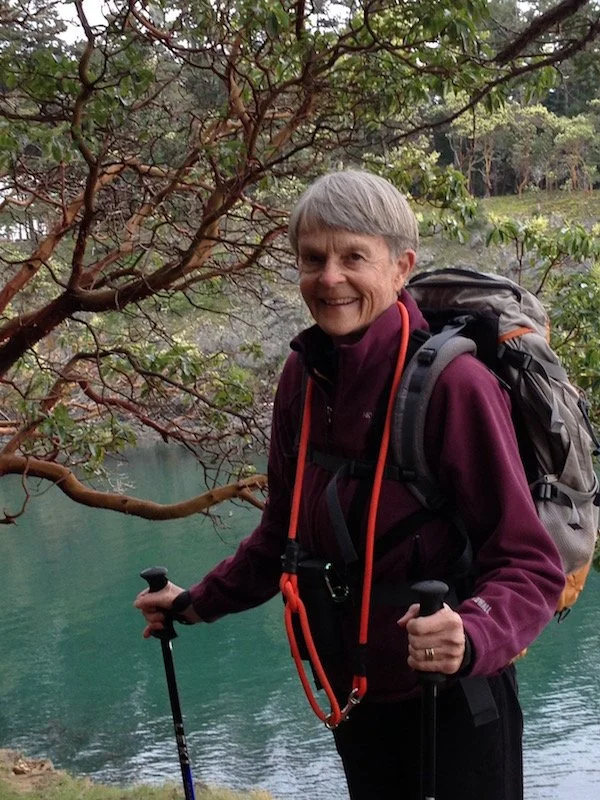
![An older woman with short gray hair smiling outdoors, holding trekking poles, wearing a backpack, near a body of water and surrounded by trees.]()
“Mary Reynolds Thompson offers many pathways for us to immerse ourselves in Nature—writing exercises, Earth celebrations, finding a spirit animal. The story of her close encounter with a cougar was hair-raising. And her personal journey with the healing power of nature is truly inspirational.”
Ann Linnea, author of Keepers of the Trees and Deep Water Passage
-
![A man wearing a wide-brimmed straw hat, glasses, and a hoodie, smiling outdoors.]()
“Mary Reynolds Thompson reminds us to listen to the essential voices that connect us to our deepest longings—the voices of the places of our lives. She shows us with tender clarity how to walk this deliciously nurturing path.”
Amos Clifford, founder of Association of Nature & Forest Therapy Guides and Programs and author of Your Guide to Forest Bathing
-
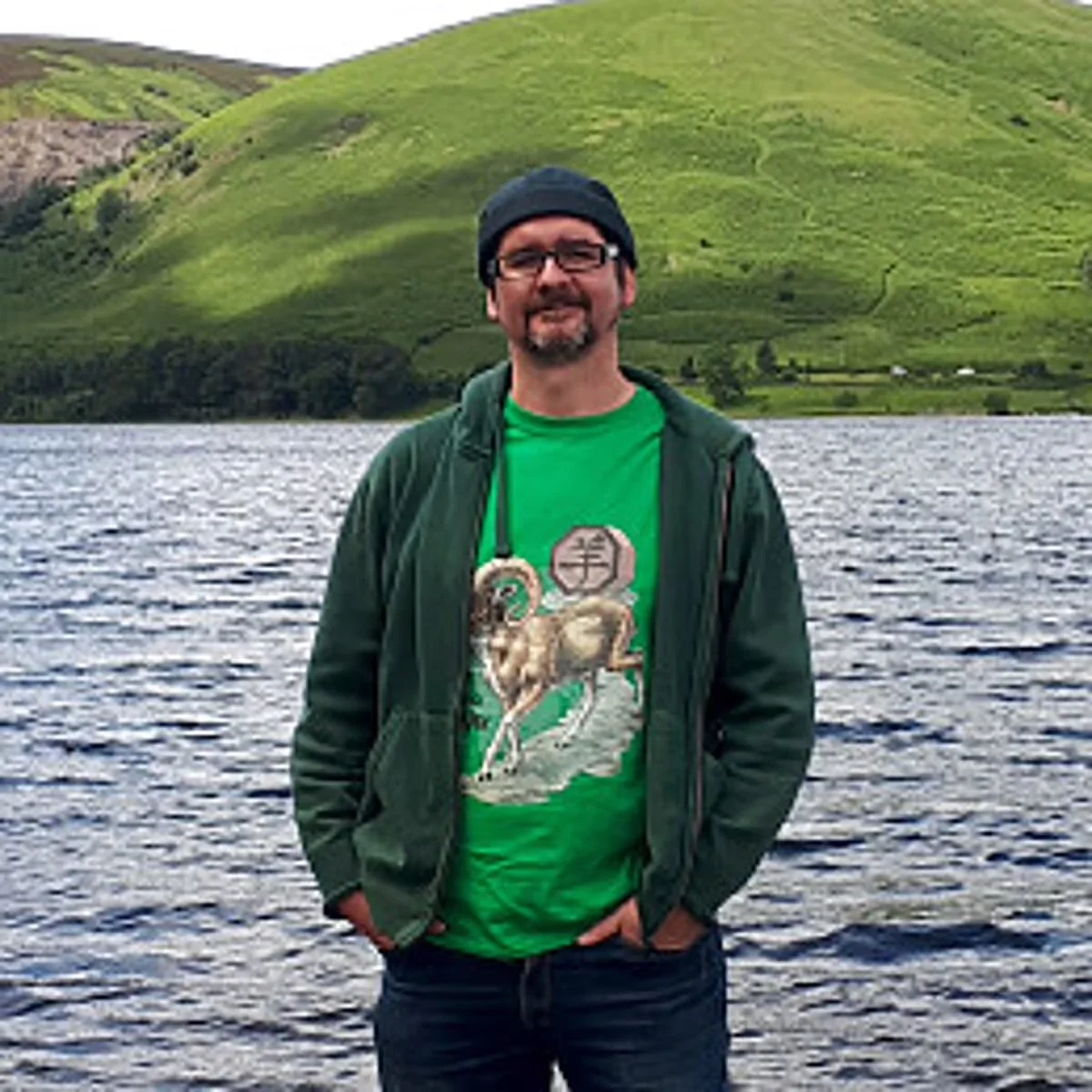
![A man standing by a body of water with green hills in the background.]()
“Thanks to this enchanting book, I have touched moments of awe among the trees. Mary Reynolds Thompson shows us how simple writing exercises can be a form of pure ecotherapy. The Wild Scribe is a beautifully written gift that I will cherish and return to—and recommend.”
Stephen McCabe, counsellor and course director at Ten Directions Ecotherapy Training
-
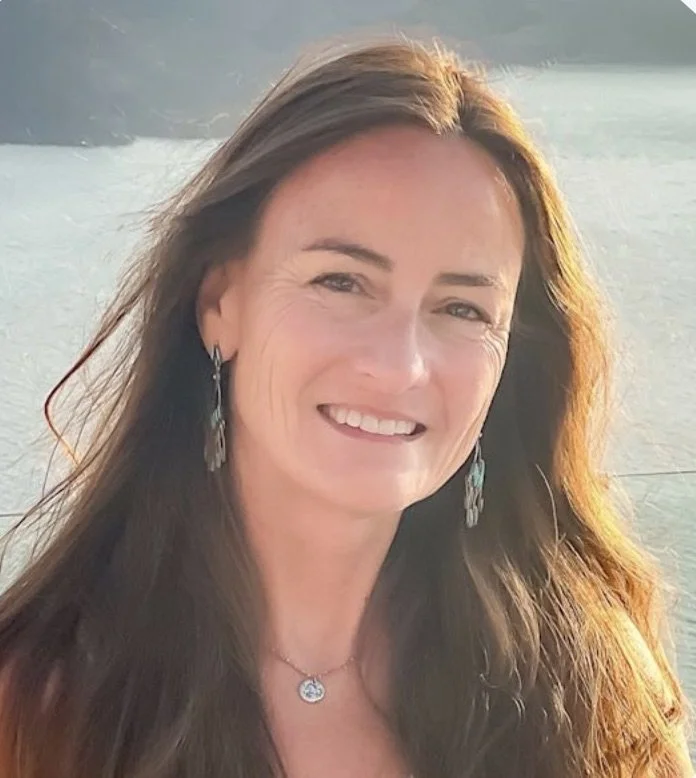
![A woman with long brown hair smiling with water and faint mountains in the background.]()
“A symphony of invitations, poetic insights, and storied reflections, The Wild Scribe moves with us—through ebb and flow, uncertainty and discovery—as we deepen both our writing and our relationship with the living world.”
Christy McConnell, PhD, Award-winning Author of Awakening Wildness: Reconnecting with Nature and Ourselves


Notes from the author
Notes from the author
The Story Behind The Wild Scribe
In January 2021, deep into the long strangeness of Covid lockdown, people gathered from across the world for a ten-month online writing series I was hosting through the Hawkwood Centre for Future Thinking in the UK. They came from Bristol and New York, from suburban homes and country cottages, each carrying different burdens, different challenges. We couldn't visit sick parents or hold the hands of the dying or even attend funerals. And yet — and this is the part that still moves me — something unexpected was already beginning.
With planes stilled, traffic thinned, construction halted, the human world receded. Into that hush, nature stepped forward. No longer distracted by daily commutes and constant movement, we slowed down enough to notice. We became aware of trees we had walked past for years, of waving grasses in the early morning–– birds whose names we didn't always know but whose songs were suddenly, startlingly present. Something ancient stirred in us.
For most of human history, our ancestors moved at the pace of seasons and tides, the slow arc of light across a winter sky. They had time to see. Time simply to be, to honor the land and the more than human companions who shared their world. That knowing is still in us, it turns out, waiting beneath the clatter and cacophony of modern life. In the enforced stillness, it rose.
And so we gathered each month to write — about the streams running through our memories and landscapes, the neighborhoods we were rooted in, the places that returned to us in dreams. What none of us anticipated was the joy. The quality of awe that moved through the group when someone found language for something they had felt but never before been able to articulate. We were not just writing about nature. We were remembering our belonging to it. And that remembering — ancient, cellular, surprisingly jubilant — changed everything.
For my husband and me, it was Pacheco Valle (no “y”) in northern Marin — a place we thought we knew after decades of living here. But with the state parks shuttered and the instruction to stay put, there was so much more to learn and experience. When my husband's father died of COVID and we couldn't travel to comfort his mother, the valley held us. When we felt stir-crazy and anxious, we opened our hearts wider still. We came to know each deer by name. We watched a raccoon sleeping in an abandoned bird's nest outside our window. We learned the language of the fog and the sun and the slant of late afternoon light. No longer observers, we were participants in something vast and alive.
This is what the Wild Scribe writing group gave us: a quality of wonder that the everyday world had long since trained us to overlook. The beauty of lichen on stone, of bark on tree, of a single squirrel on a limb in a world shut down — these things broke us open. And in that opening, something shifted. We were no longer watching nature from a careful distance. We were nature, waking up to herself.
The Wild Scribe was born from that waking. The world hasn't grown any saner since. And that primary relationship with the Earth from which we all emerged — the one this book tends and explores and celebrates — remains, I believe, as essential as breath.